 News
News Access
 Contact Us


This site uses cookies for access analysis and interest-based advertising. By continuing to browse, you agree to our use of cookies. Please refer to our Privacy Policy and Site Policy.
About Yokohama Noh Theater


A Noh theater featuring a historic Noh stage, situated on a hill overlooking the sea in Yokohama
In 1996, in response to strong public demand for a Noh theater in the city, it was built in a corner of Kamon-yama Park.
The main stage of the Yokohama Noh Theater is a historic Noh stage that was relocated from Kaminegishi, Tokyo—near the current Tokyo National Museum—where it was originally built in 1875 as part of the retirement villa of Maeda Nariyasu, the former lord of the Kaga Domain.
Since opening, we have staged numerous special performances and organized events and workshops designed to help people become familiar with Noh and Kyogen. Additionally, to ensure that people with disabilities can also enjoy our performances, we have been presenting barrier-free Noh performances since our fifth year of operation.
We also offer free facility tours and exhibitions so that visitors can not only attend performances but also casually experience the world of Noh and Kyogen.



Facility Overview
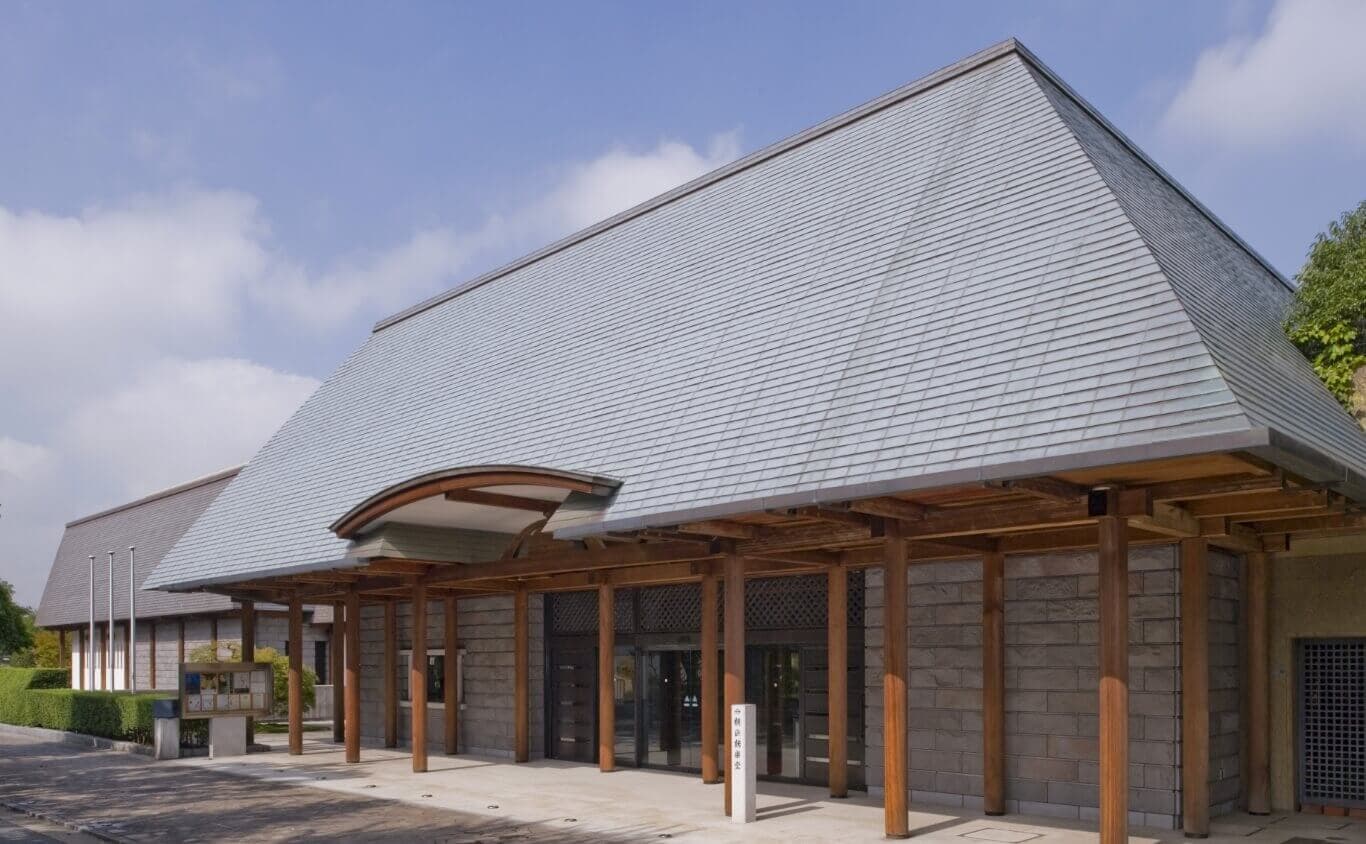
The Yokohama Noh Theater boasts a Noh stage with over 150 years of history. In addition to hosting performances of classical performing arts such as Noh and Kyogen, the theater also rents out its Noh stage and rehearsal spaces to both professionals and the general public.
We organize facility tours that allow visitors to view the Noh stage up close, and hold exhibitions related to Noh and Kyogen in the second-floor gallery, all as part of our efforts to help people learn about the world of Noh and Kyogen.
Please take a look at the interior of the hall, along with the Virtual Noh Theater.
* Please note that the Yokohama Noh Theater will be closed until June 2026.
Performances and facility tours will resume in July. Please check the schedule.
1st Floor
1Lobby
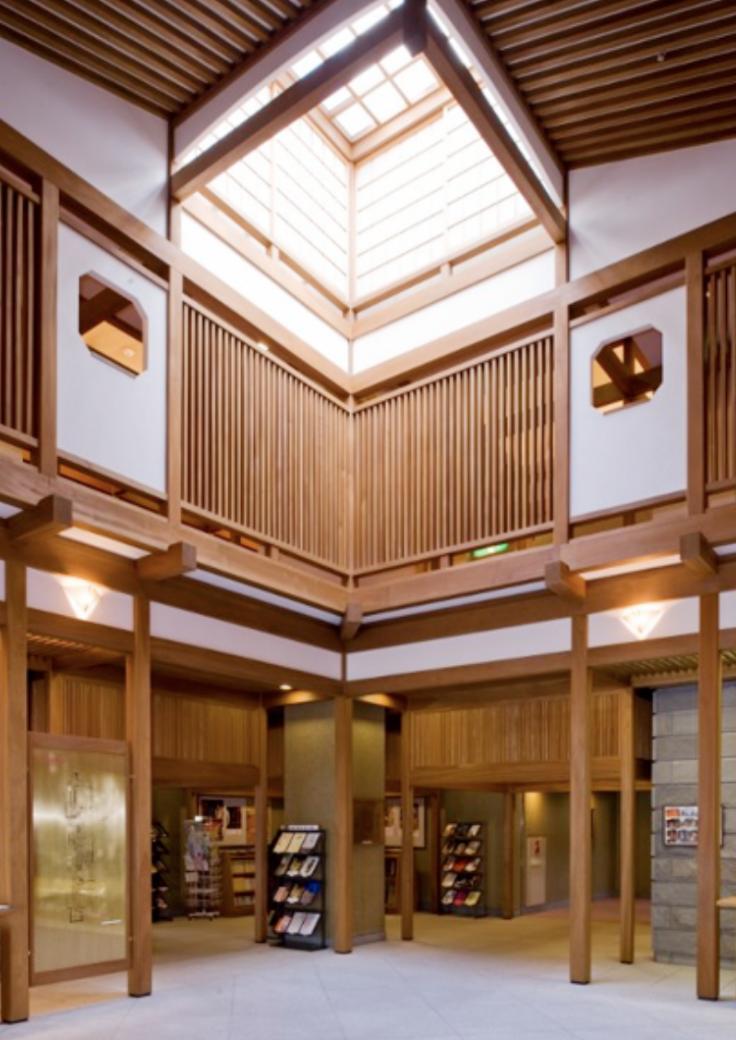
Entering through the main entrance leads to the lobby. You are free to enter when there are no paid performances on the main stage. The Yokohama Noh Theater’s atrium is a space where soft light pours in from the high ceiling. Enjoy the harmonious space made of cypress and stone. There is a rest area in front of the vending machines.
2Main Stage
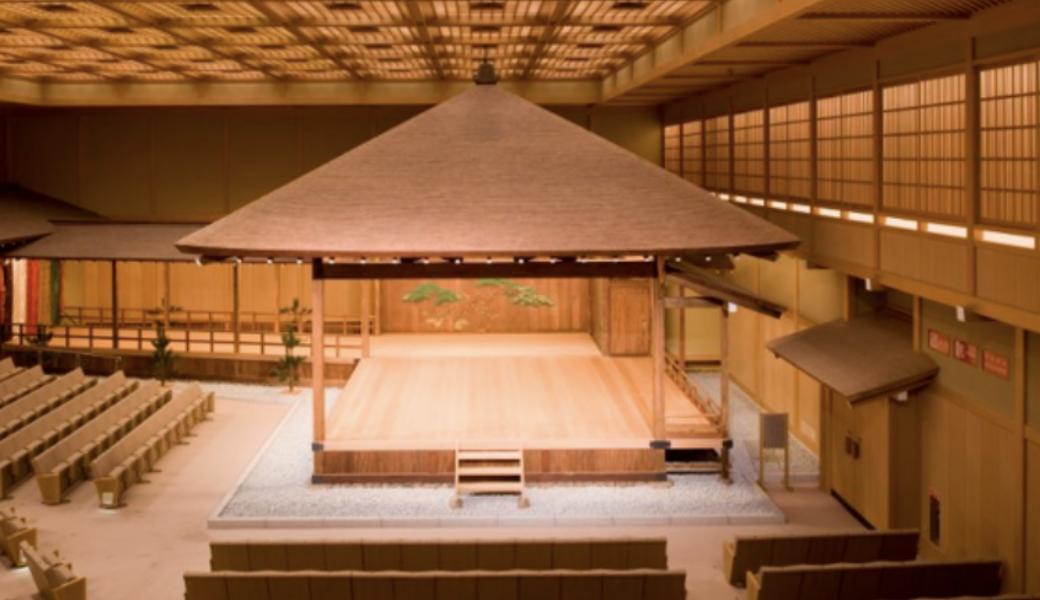
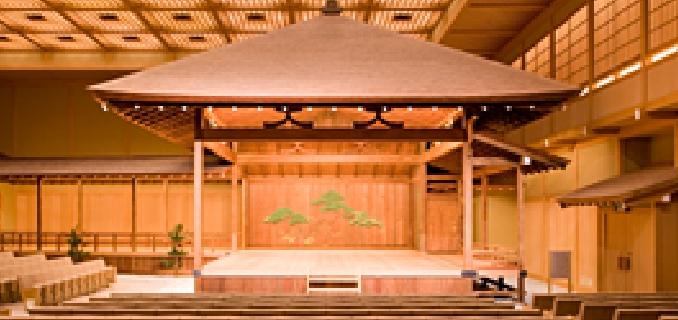
The venue features a historic Noh stage built in 1875.
In addition to Noh and Kyogen performances, the space is available for classical performing arts performances, recitals, and rehearsals (486 seats). While regular tours allow visitors to view the stage from the second-floor seating area, facility tours offer a close-up view.
The first-floor seating area is barrier-free with no steps.
3Shōtei(Pine Garden)
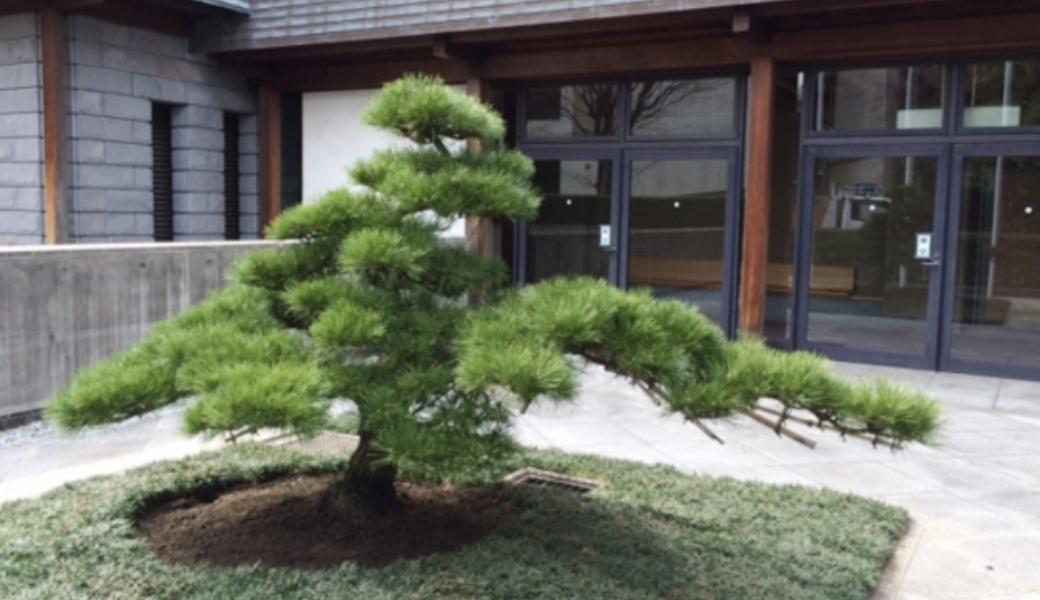
There is a garden with pine trees on the left side of the auditorium. On nice days, you are welcome to step outside for a break.
2nd Floor
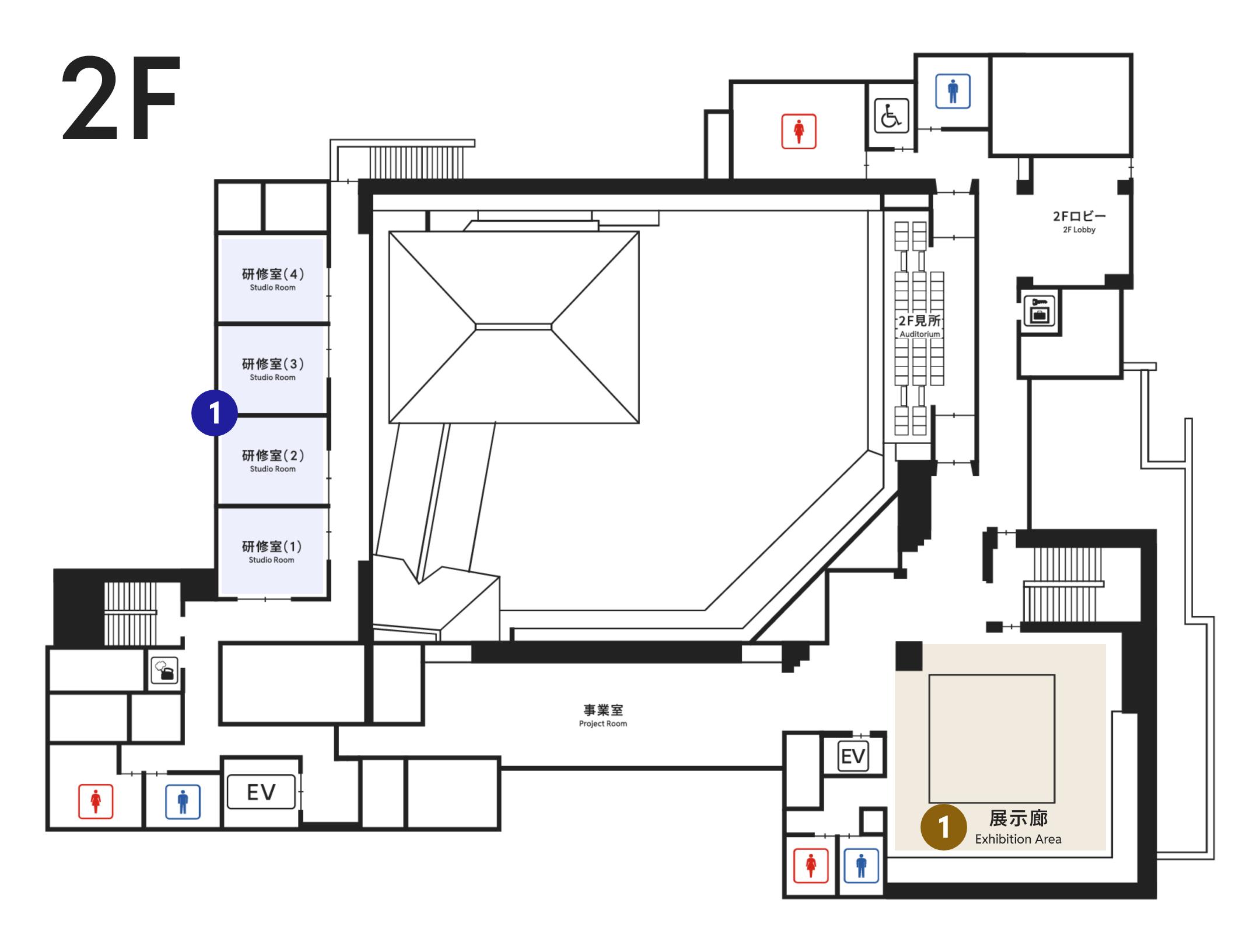
1Exhibition Gallery
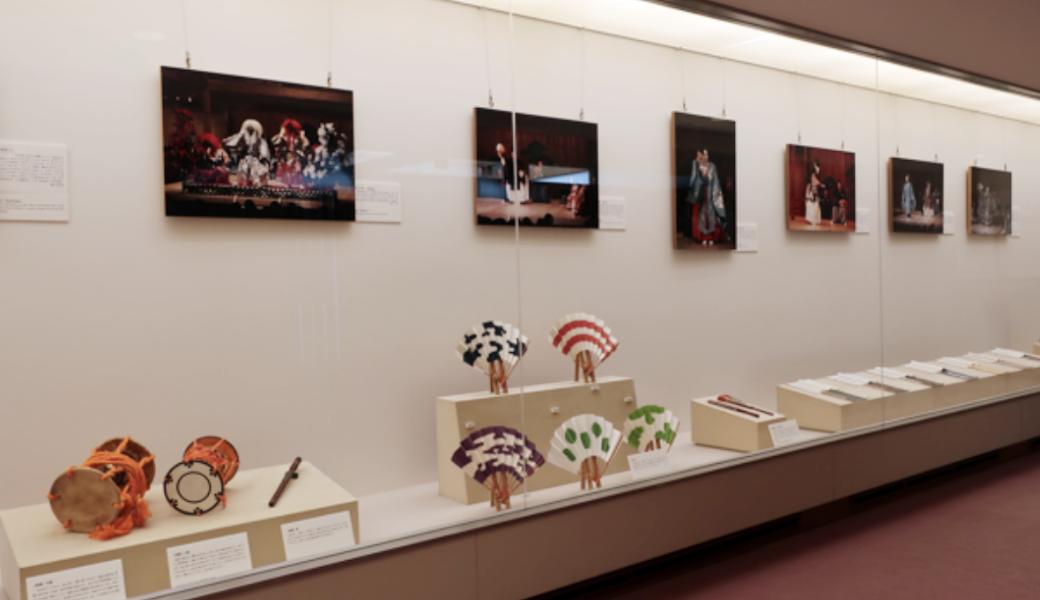
We feature exhibits related to Noh theater, including masks, costumes, and musical instruments.
Once a year, we hold a special exhibition based on a specific theme.
You are welcome to view the exhibits at your leisure.
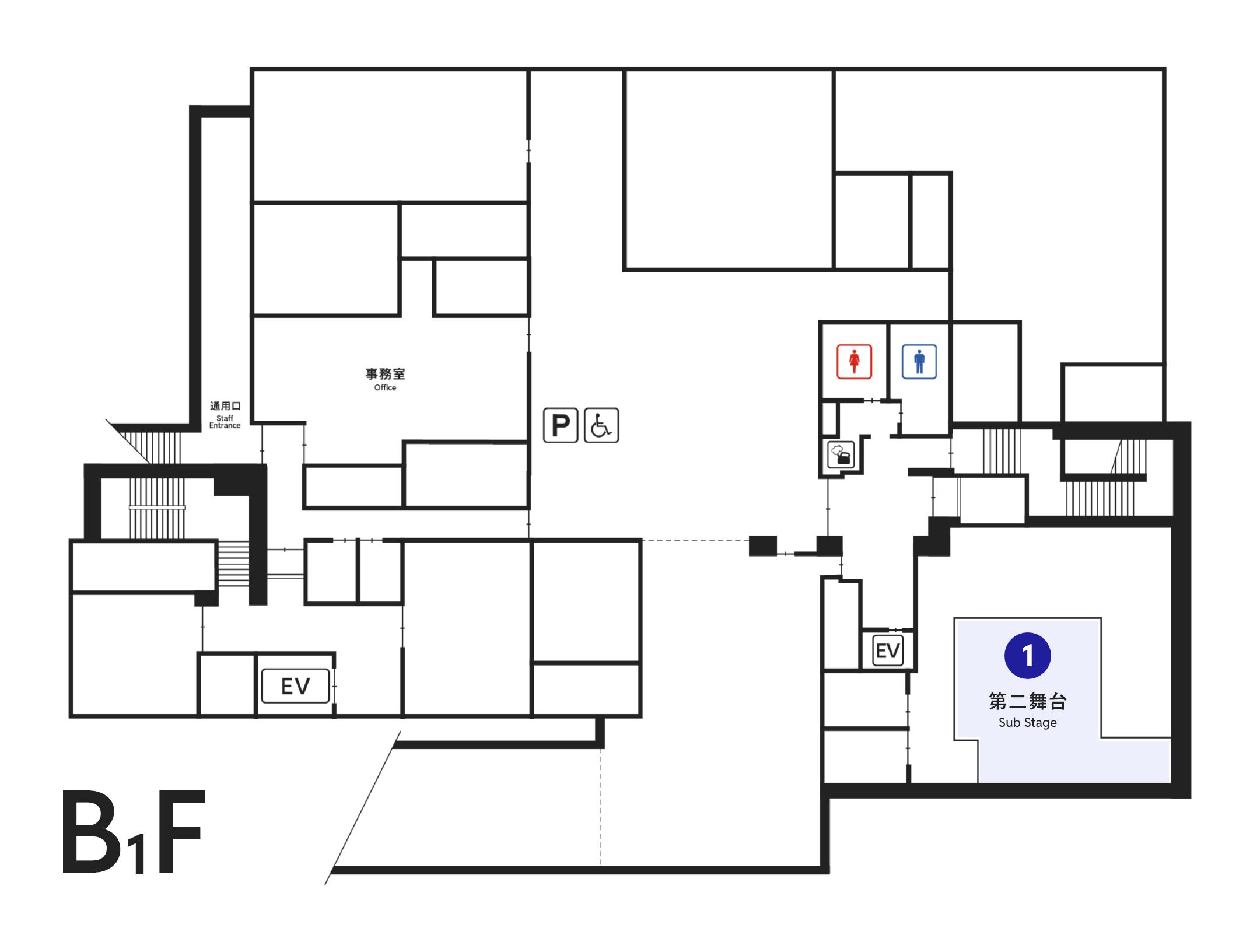
Click on each map to enlarge it.
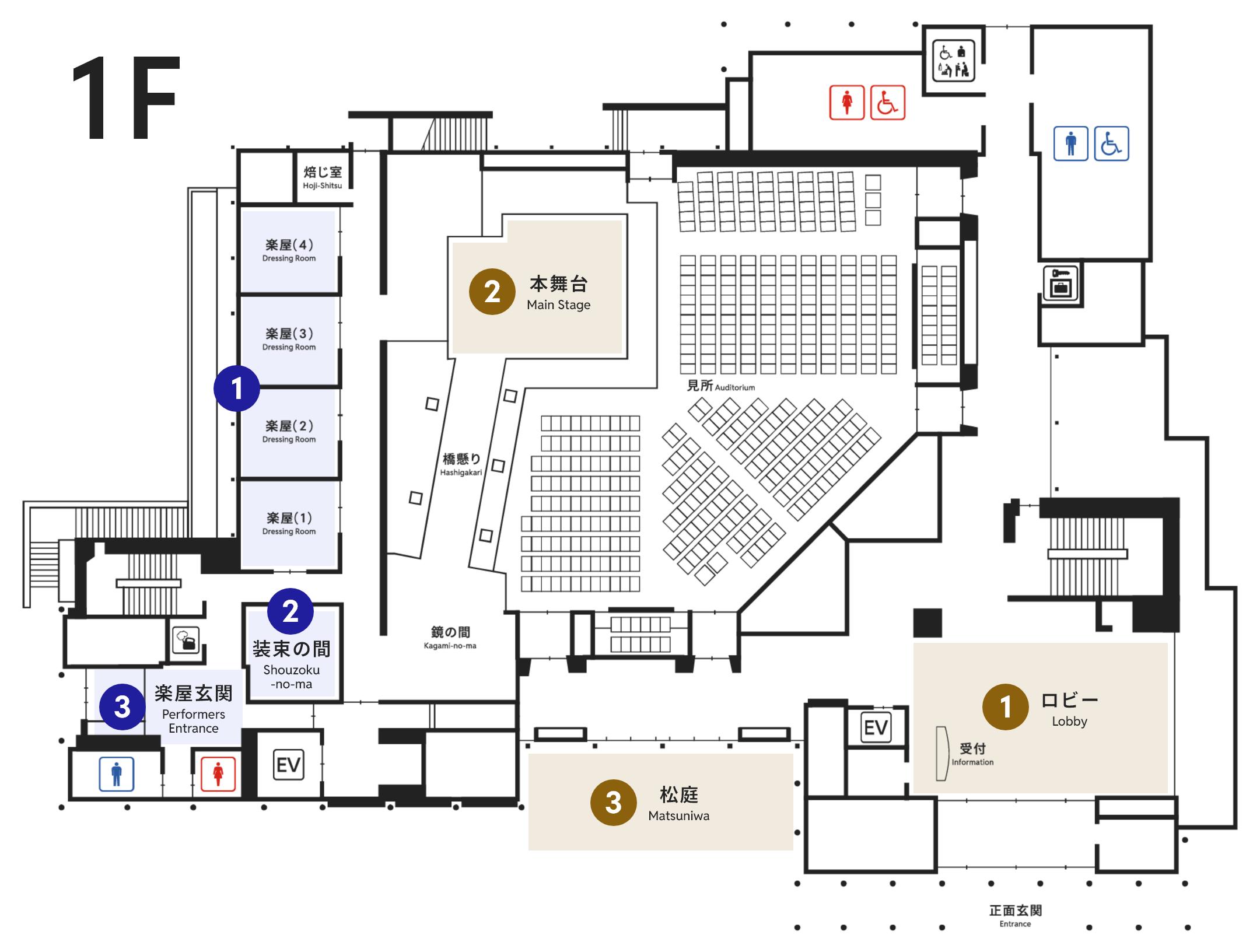
Area for facility users
Closed to the public except for facility tours, and only available to users
Basement Level 1
1Second stage
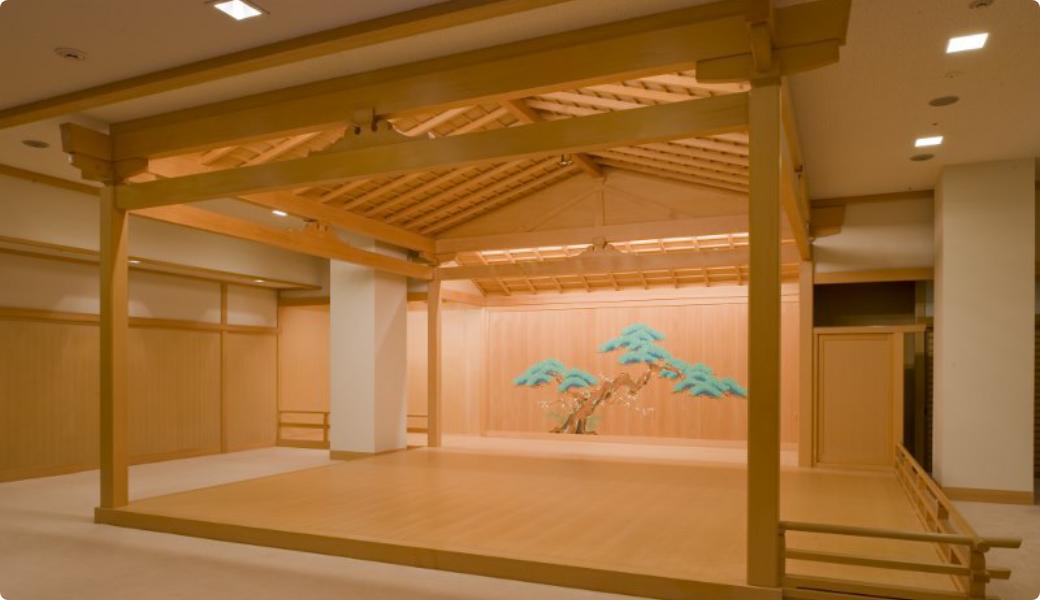
The second stage is modeled after the main stage. It can be used for recitals and rehearsals.
1st Floor
1Dressing room
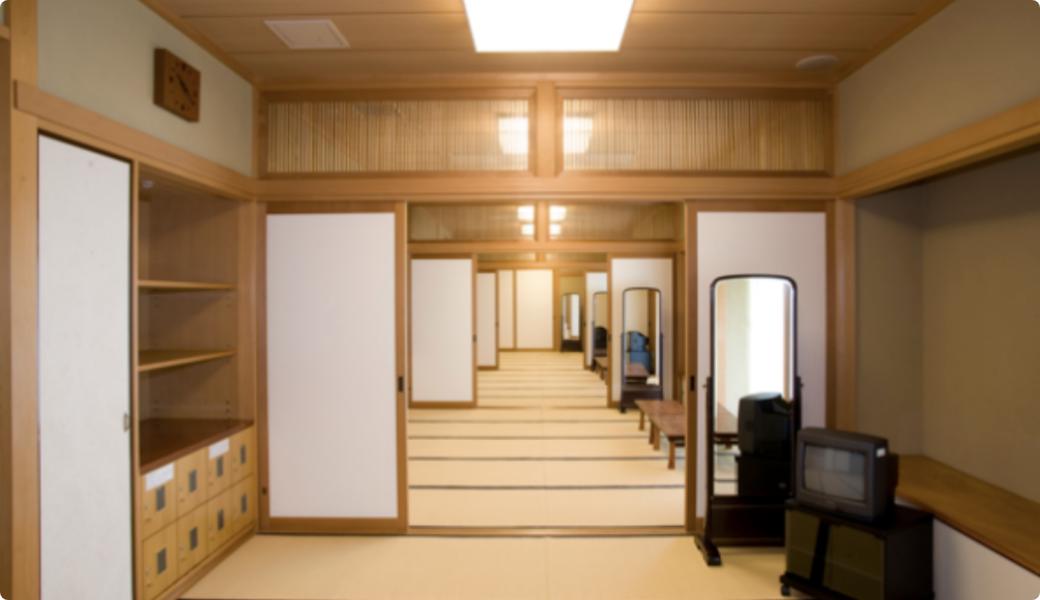
It can be used as a dressing room when the main stage is in use, and can also be used on its own when the main stage is not in use.
2Shōzoku no ma(Costume Room)
This is the room where Noh actors put on their costumes for the performance.
3Backstage Entrance
If you wish to use the training room or dressing room, please enter through the dressing room entrance.
2st Floor
1Training room
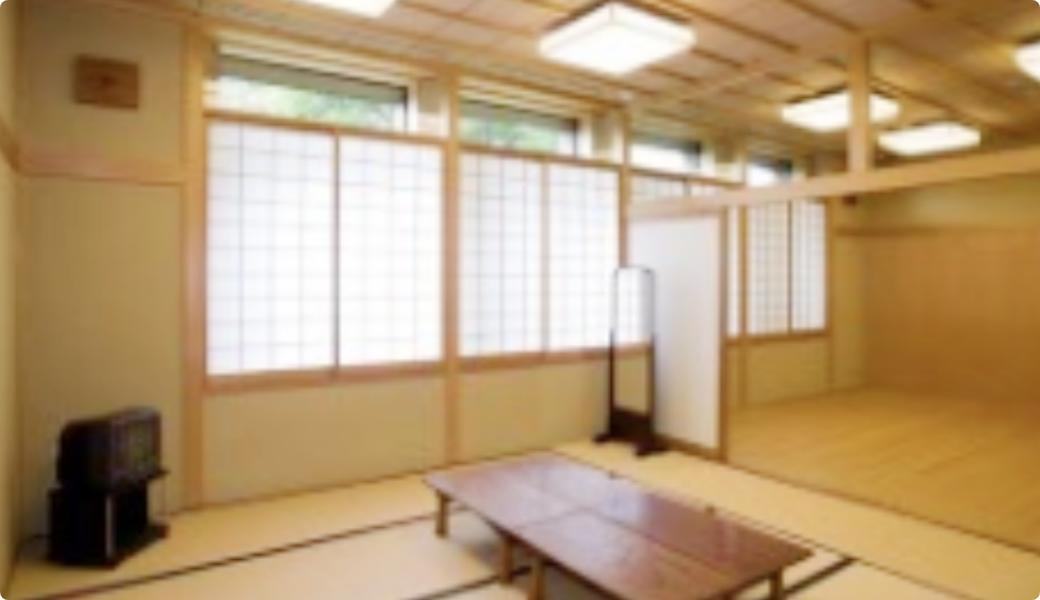
It can be used for practice etc.

Projects undertaken by the Yokohama Noh Theater
Since its opening in 1996, the Yokohama Noh Theater has undertaken a wide range of initiatives to help more people become familiar with classical performing arts, including Noh and Kyogen.
We have held performances that convey the appeal of Noh and Kyogen from a variety of perspectives, as well as performances and lectures that meet a wide range of needs so that a wide range of people can become familiar with Noh and Kyogen.
Here we introduce some of these initiatives.
Main Performances Activities
Planned performances, special performances
November 2002 “Sotoba Komachi” as Hideyoshi Saw It
This performance aimed to reconstruct the style of Noh theater from the Momoyama period, when performance times are believed to have been approximately 60% of their current length.
A project team was formed with researchers and experts active in various fields to revive the costumes, musical accompaniment, chanting, and dance based on scholarly research. The program featured two performances in a single day: the modern version of “Sotoba Komachi” and the reconstructed version of “Sotoba Komachi.”
In contrast to the current style, which is performed with solemnity as a play featuring an elderly woman, the reconstructed “Sotoba Komachi” was a lighthearted and expansive production that reflected the vibrant atmosphere of the Momoyama period, garnering a tremendous response.
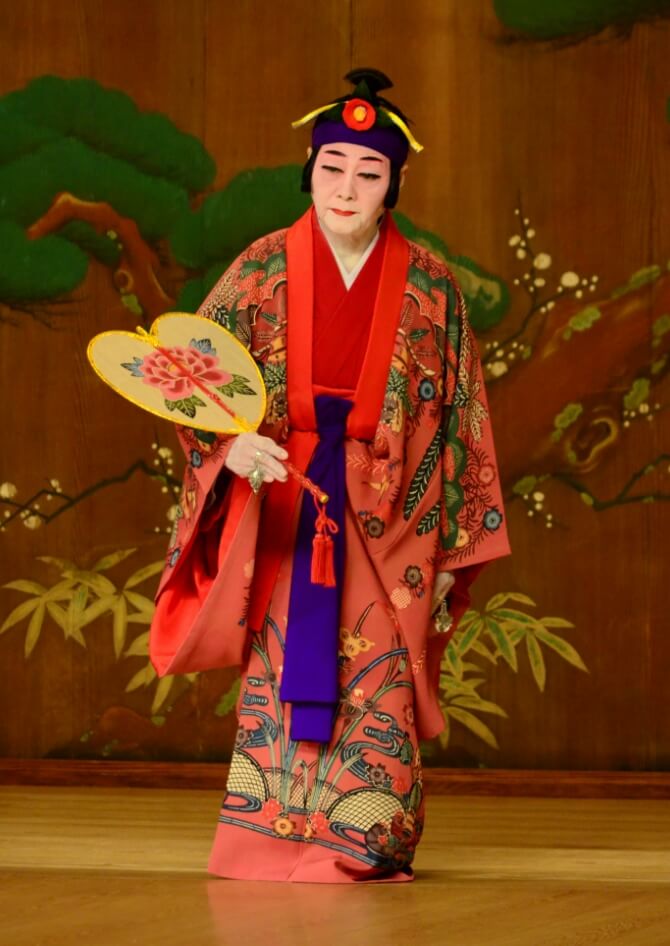
November 2014 Themed performance Ryuku Buyo - Koten Onna Nana Odori (Ryukyu Dance -Seven Dance Repertorie of Traditional Women’s Dances)
Among Ryukyuan dance forms, which evolved as ceremonial music of the Ryukyu Kingdom, the seven classical women’s dances—(“Tsukiten,” “Kasekake,” “Amakā,” “Yanaji,” “Nufabushi,” “Mutunuchibana,” and “Shudun”) were performed all at once by leading contemporary dancers. Praised for its high artistic quality and innovative programming, this performance won the Grand Prize in the Dance Division’s Kanto Participating Performances category at the 69th Agency for Cultural Affairs Arts Festival. This marked the first time a public theater in the Kanto region had won an award, and the first time Ryukyuan performing arts had received the Grand Prize, making it a major talking point.
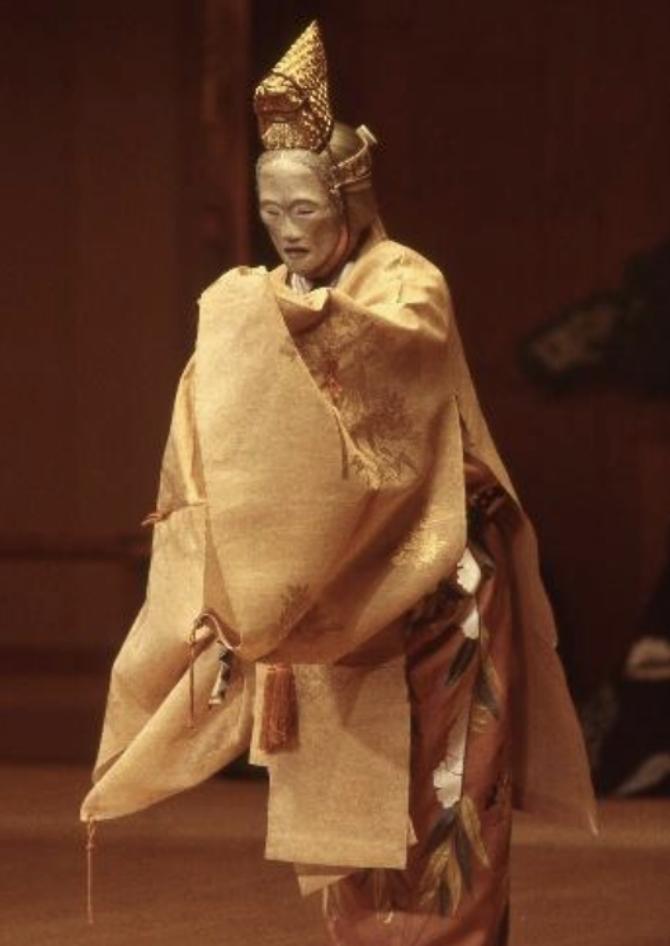
April to June 2022 Special performance “San-rojo”
We presented a three-month series of performances featuring the “San-rojo”—a collective term for the three most exquisite and rare Noh plays: “Obasute,” “Higaki,” and “Sekiji Komachi.” Depicting “old age” in Noh requires highly refined technique, and the “San-rojo” in particular demand a high level of spiritual depth and artistic mastery. For this series, we assembled a cast of today’s leading performers for each role, offering a rare opportunity to savor the supreme artistry of these masters.
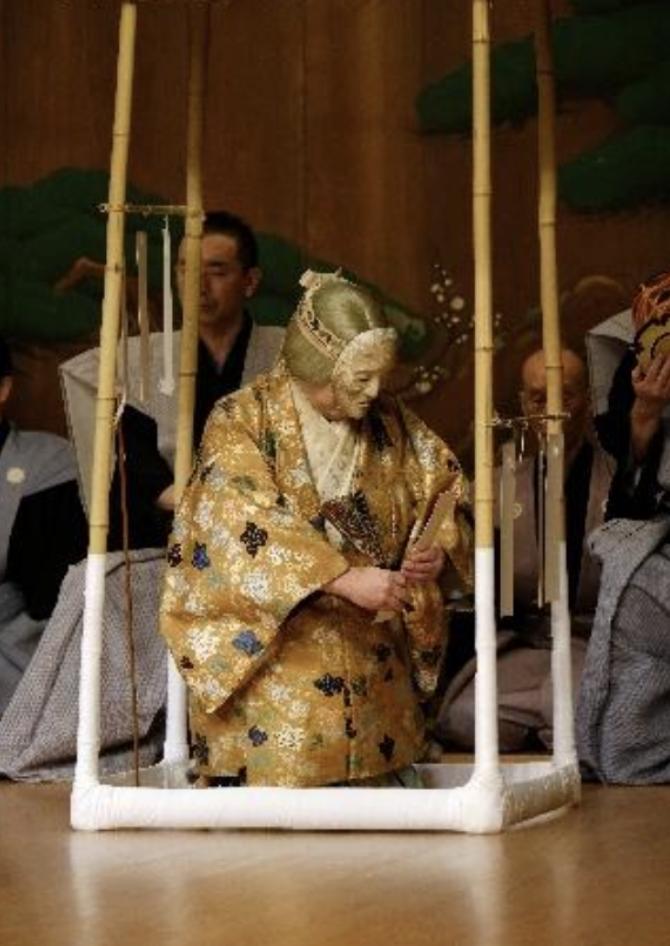
February 2023 Themed performance Noh actoress “UZAWA Hisa”
With his undeniable skill and deep insight into music, Hisa Uzawa not only performs classical works, but also actively engages in new endeavors such as participating in contemporary theater, and continues to excel beyond gender boundaries.
This program features the artistry of Hisa Uzawa, highlighting his work including “Pratyahara Event,” a collaboration between his mentor, Hisao Kanze, and contemporary music, composed by Toshi Ichiyanagi, and “Sotoba Komachi,” a masterpiece from classical Noh theater that sharply depicts the passions of women.
Hisashi Uzawa received the Pola Culture Award, and the success of this performance was cited as a reason for the award.
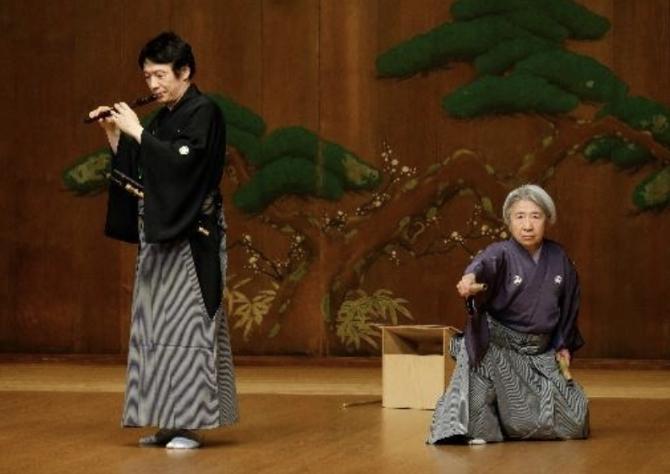
Yokohama Kyogen-do, January 2008 -
“Yokohama Kyogen-do” is a series of performances held under the slogan “The Second Sunday is Kyogen Day,” offering audiences the chance to enjoy commentary and two Kyogen plays at an affordable price.
Since January 2008, the series has held monthly performances, with the total number of shows now exceeding 190. Popular for being accessible even to beginners, the performances are helping to introduce the charm of Kyogen and the different schools of Kyogen, and are increasing the number of Kyogen fans.
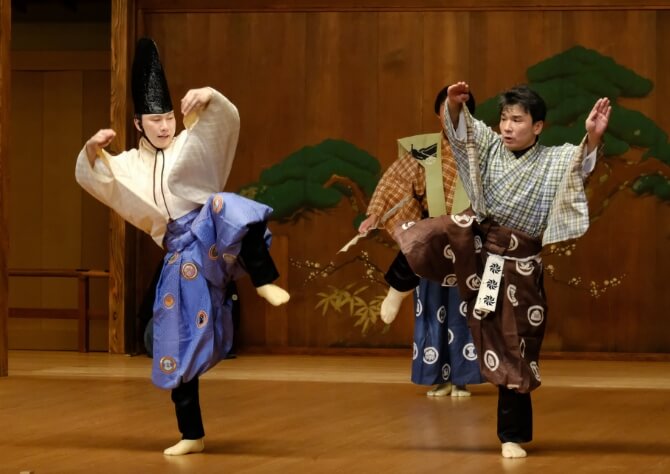
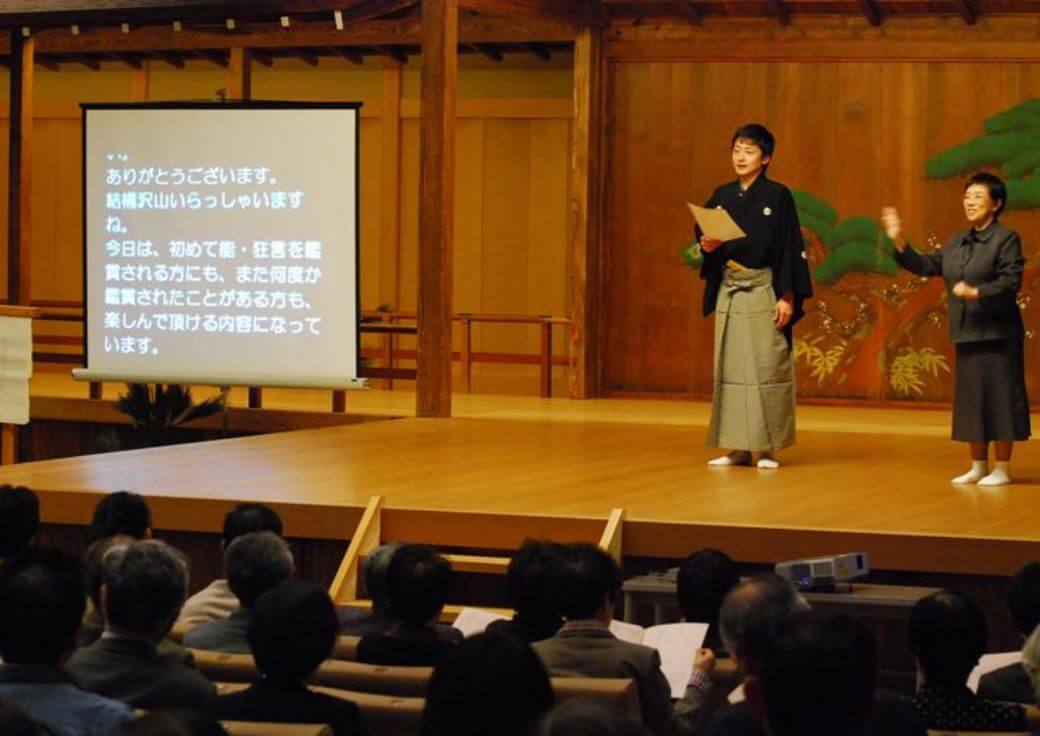
Barrier-free Noh, March 2000 -
This performance is designed to make Noh and Kyogen accessible to people with disabilities and beginners, including free admission for one caregiver, Braille leaflets and brochures, audio guides, sign language interpretation, and live subtitles during the performance, with various support systems in place.
We have visited various disability support organizations to hear about their initiatives and support systems, and have made improvements every year.
In 2015, we received the “Minister of State for Special Missions Award for Excellence” from the Cabinet Office for our contributions to promoting barrier-free and universal design.
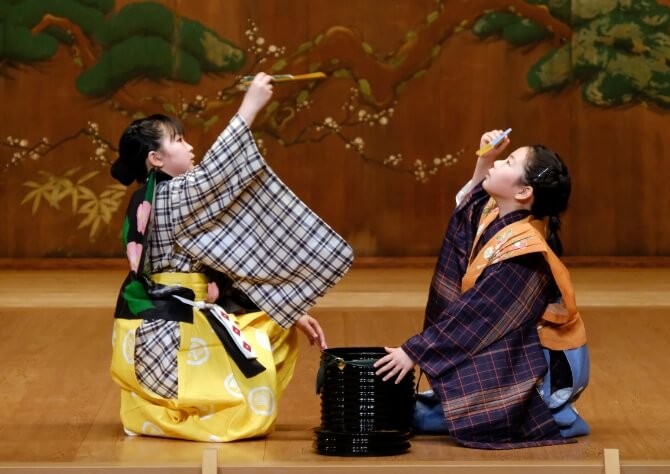
Children’s Kyogen Workshop, August 1996 -
Kyogen workshop designed for elementary and junior high school students. The workshop is structured as a series of sessions—“Introduction,” “Graduation,” and “Performance”—and progresses step by step through appreciation, hands-on experience, practice, and performance. This approach provides an opportunity for children, even those encountering Kyogen for the first time, to deepen their understanding, become familiar with the art form, and experience it with enthusiasm.
The workshop is led by the Yamamoto Tojiro family, a prestigious lineage of the Okura School of Kyogen. It is highly regarded for teaching not only the practical skills of Kyogen but also etiquette and the spiritual values inherent in classical performing arts that have been passed down through generations of Japanese people.
The history and characteristics of the Noh stage
The main stage of the Yokohama Noh Theatre is a precious witness to history, having carried the hopes and dreams of people for approximately 150 years. Let’s trace its history.
-
A stage created by a feudal lord who loved Noh - Meiji era
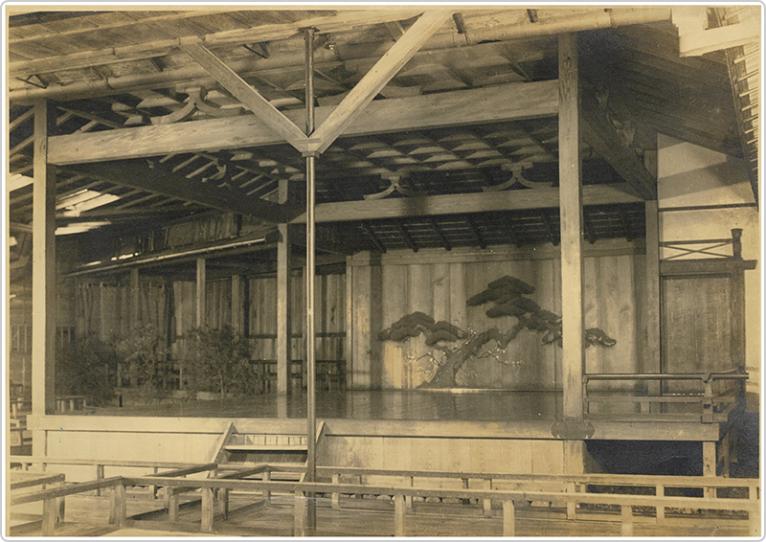
The main stage of the Yokohama Noh Theatre was originally built in 1875 in a corner of the residence of Maeda Nariyasu, the former lord of the Kaga Domain, in Negishi, Tokyo.
Kanazawa, in the Kaga Domain, was a region where Hosho-ryu Noh was so popular that it was said “Noh chants rained down from the sky.” Nariyasu also deeply loved Noh, and during the “Imperial Noh Performance” of 1876, a major event in the history of modern Noh, he even performed alongside professionals in front of Emperor Meiji.
He is also known for popularizing the term “Nohgaku” in place of the previous “Sarugaku”, and for his efforts in reviving Noh theater, which had declined due to the Meiji Restoration. -
Activities in Somei, Tokyo - Taisho and early Showa periods
However, after Nariyasu's death, the estate was put up for reorganization, and in 1919, it was relocated to the residence of Count Matsudaira Yorihisa, a member of the former Takamatsu domain lord family who also practiced the Hosho-ryu. Because it was located in Somei, near Komagome Station on the Yamanote Line, it subsequently became widely known as the “Somei Noh Theater.”
-
Noh theaters during and after the war
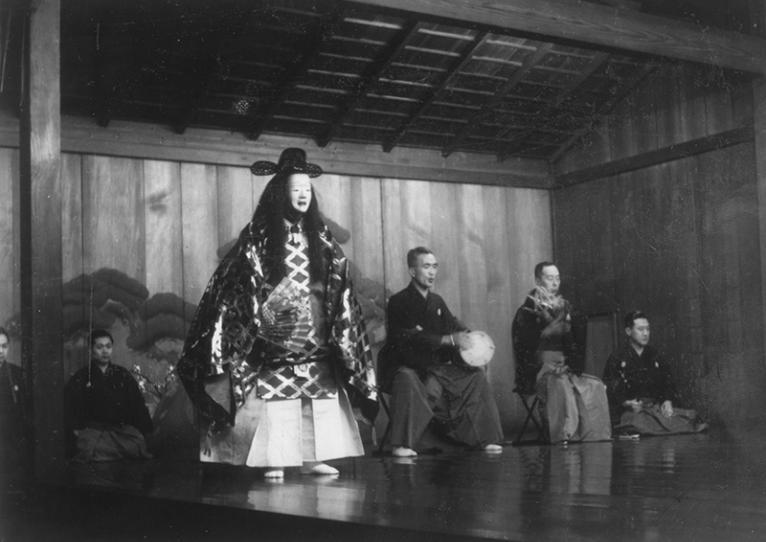
During the air raids of World War II, Tokyo suffered immense damage, Most of the more than ten Noh theaters were Burned, leaving only four. Among the Noh theaters that escaped destruction, the Somei Noh Theater was large and conveniently located. Therefore, after the war, Noh and Kyogen performances flourished not only within the Hosho school but also across different schools.
The Somei Noh Theater also stands as a witness to history, having observed a turbulent era. Around August 15, 1945, a performance titled “Noh for Boosting Morale” was held on the 14th to bolster the will to fight, followed by an event titled “Noh for the Reconstruction of a Peaceful Japan” on September 16. It was also featured in the 1949 film “Late Spring”, directed by Yasujirō Ozu and starring Setsuko Hara, which includes a long take of Manzaburō Umewaka II performing the Noh play “Kakitsubata”. -
Citizens’ movement to build a Noh theater - Late Showa period
Yet as theaters belonging to various schools and families were rebuilt, this one gradually fell into disuse. Due in part to its deteriorating condition, it was dismantled in 1965, and its components were stored in a basement room at the Hosho Noh Theater in Suidobashi.
Upon hearing this, Mr. Takeo Tanabe, a Kanze school Noh performer living in Yokohama, negotiated with the Hosho school and acquired the materials in 1973. This served as the catalyst for a campaign to build a Noh theater, spearheaded primarily by members of the “Fukuyo-kai,” who were training under Mr. Tanabe. The movement expanded as it drew in stakeholders, starting with the “Yokohama Noh Theater Federation,” which was joined by members of various Noh schools who were practicing the art. Beginning with a petition that garnered over 50,000 signatures and raising approximately 100 million yen in donations, they petitioned the city to build a Noh theater. -
The opening of the Yokohama Noh Theatre - Heisei era
In the 1950s, Yokohama hosted “Yokohama Noh” performances featuring top-tier performers, organized by the citizens themselves. Unlike the castle towns of the Edo period, which had a long history of Noh theater, this event was a true reflection of Yokohama—a city built by its citizens one by one since its opening as a port. It was against this cultural backdrop that the campaign to build a Noh theater was enthusiastically launched.
These efforts bore fruit, and in June 1996, the Yokohama Noh Theater opened its doors, carrying on the legacy of the Negishi and Somei eras.
While there are several Noh stages throughout Japan that predate the Yokohama Noh Theater’s “Main Stage” and were built before the Edo period, they are typically located within the grounds of temples and shrines and are not widely used by the general public. Among these, the Yokohama Noh Theater’s “Main Stage” is the oldest stage located within a dedicated Noh theater. A historic stage that anyone can use freely at any time—this is perhaps the defining characteristic of the Yokohama Noh Theater, a venue truly created by its citizens.
This stage was designated as a Yokohama City Cultural Property in 1996 under the name “Former Somei Noh Stage.” -
Reopening - The Reiwa Era
Since January 2024, the Yokohama Noh Theater has been closed for extensive renovations. During this closure, the Noh stage has been protected and is now in a state of quiet slumber.
In the summer of 2026, the Noh stage will awaken from its slumber and reveal itself to the public. Having endured five eras—Meiji, Taisho, Showa, Heisei, and Reiwa—it will continue to carve its place in history.
About YouTube
The Yokohama Noh Theater YouTube channel offers a wide variety of engaging content, including videos of past performances, introductions to Noh and Kyogen, and interviews with performers.
Link to the Yokohama Noh Theater’s YouTube channel.


You can enjoy Kyogen performances with English subtitles
Children's Kyogen Theater Kyogen “Kakiyamabushi” (Okura)