 News
News Access
 Contact Us


This site uses cookies for access analysis and interest-based advertising. By continuing to browse, you agree to our use of cookies. Please refer to our Privacy Policy and Site Policy.
Introduction to Noh and Kyogen works


Representative Noh plays
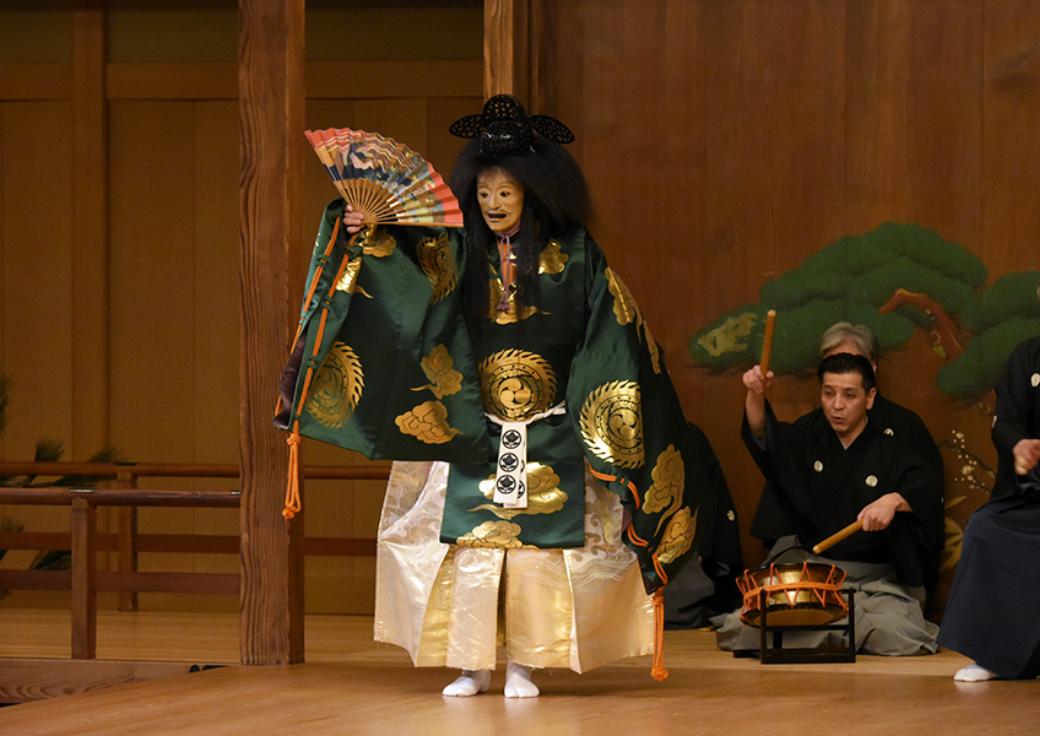
Noh:Yōrō
Coming soon
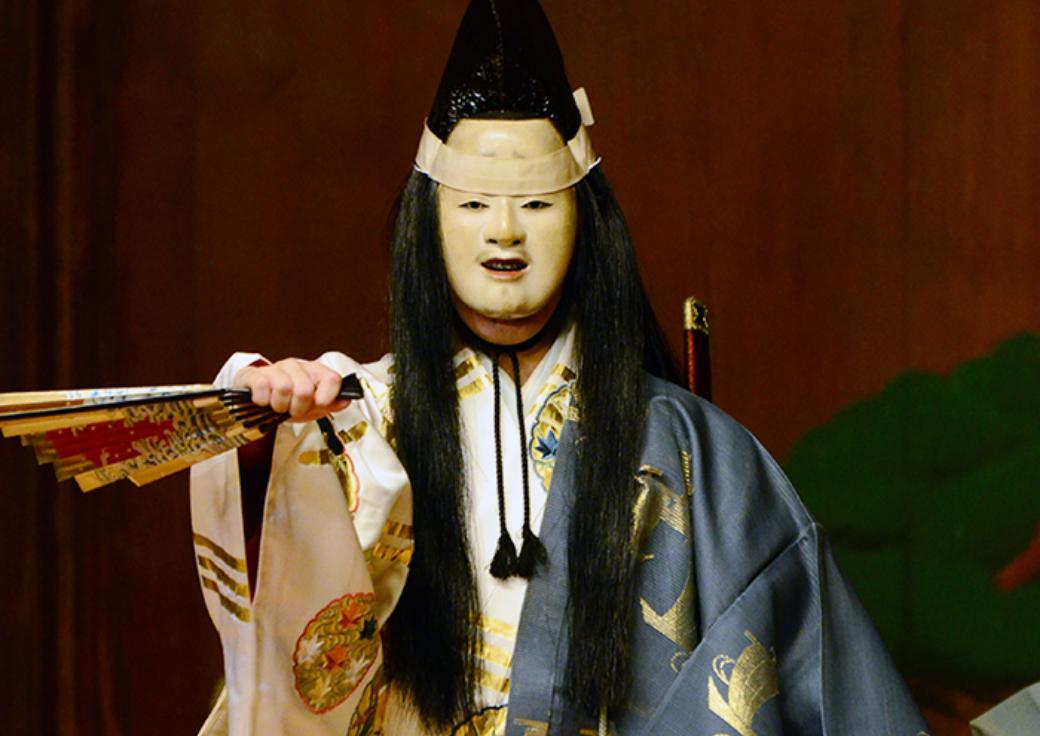
Noh: Atsumori
Kumagai Jiro Naozane, a military commander of the Minamoto clan, killed Taira no Atsumori at the battle of Ichinotani. Then, feeling the impermanence of the world, he became a monk, taking the name Rensho Hōshi. When Rensho visited Ichinotani to pray for the fallen, the spirit of Atsumori appeared, thanked him for his prayers, and began to tell Rensho the story of his own repentance for the past.
This is a Shura, or Warrior, Noh play featuring Atsumori, a beautiful youth who died at the age of 16 and is based on such works as “The Last Days of Atsumori” from Volume 9 of “The Tale of the Heike.”
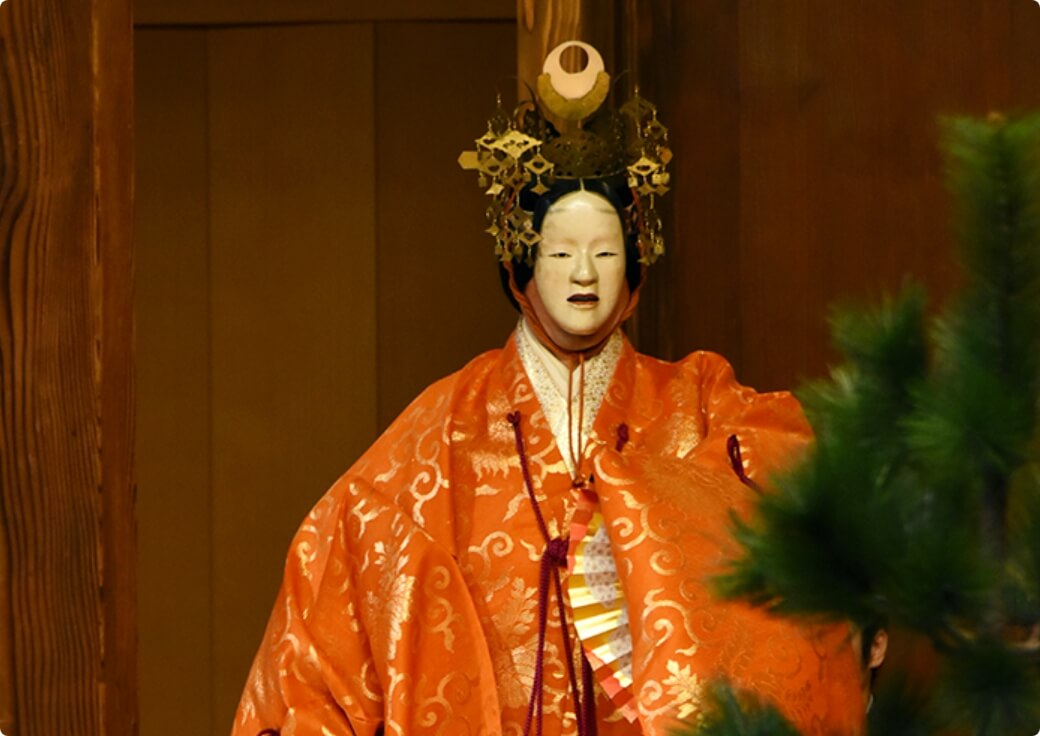
Noh: Hagoromo
On a bright spring day, Hakuryō, a fisherman living in Miho no Matsubara, saw a beautiful robe hanging on a pine tree and decided to take it home. A Heavenly Maiden then appeared and asked him to return the robe of feathers to her. Hakuryō refused at first, but seeing the sadness of the Heavenly Maiden, he replied that he would return the robe on the condition that she show him dances of the Heavenly Maidens. Wearing the robe of feathers, the Heavenly Maiden danced beautifully and then returned to the heavens.
This is a representative Noh play based on the “Legend of the Robe of Feathers” found in the Fudoki and other literature.
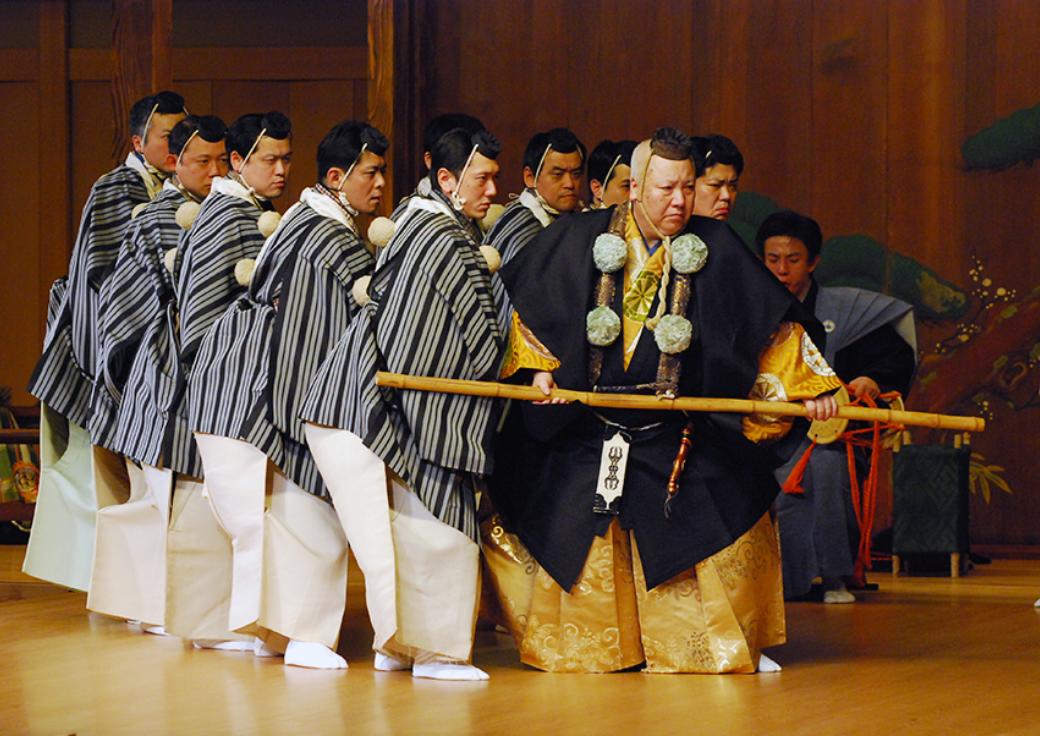
Noh: Ataka
Yoshitsune, pursued by his elder brother Minamoto no Yoritomo, disguised himself as a yamabushi, or mountain ascetic, and, with Benkei and other retainers, attempted to flee to Oshu. Arriving at the Ataka Barrier, the group tried to pass through with Yoshitsune disguised as a baggage carrier. Togashi, the Warden at the barrier, was suspicious and called attention to him, but thanks to Benkei’s quick response the group was able to escape the danger successfully.
This piece is also the basis for the Kabuki play “Kanjincho,” one of the Eighteen Best Kabuki Plays. The dramatic ups and downs and breathtaking developments are the highlights of the play.
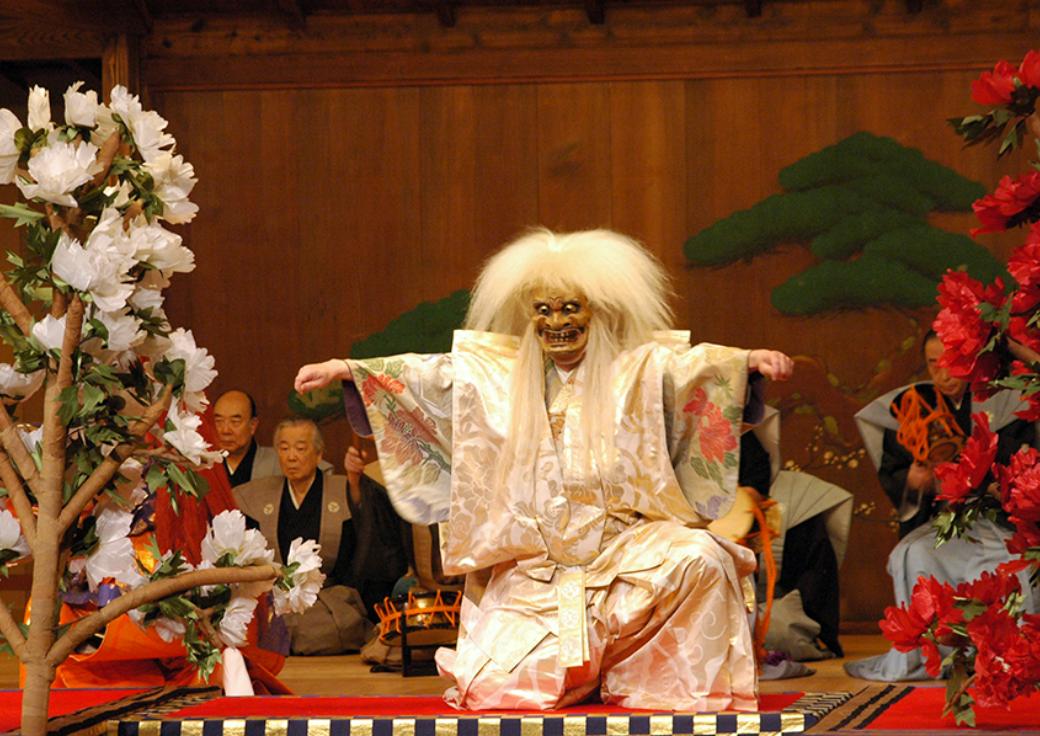
Noh: Shakkyo
On his way to China, the Buddhist priest Jakushō visits Mt. Shōryōsen, where Monju Bosatsu, the Bodhisattva Manjusri, is said to reside. When Jakushō tries to cross the stone bridge leading to Mt. Shōryōsen, a lion, a sacred mystical beast, appears. It frolics among the red and white peonies blooming all over the mountain, and then dances and plays in, naming classical dances of celebration and long life.
The first half of this Noh has a solemn and dignified atmosphere, while the second half, beginning with the music of the entrance called “Ran-Jo” and followed by the magnificent lion dance, has many highlights and interesting scenes both to see and hear.
Representative Kyogen Plays
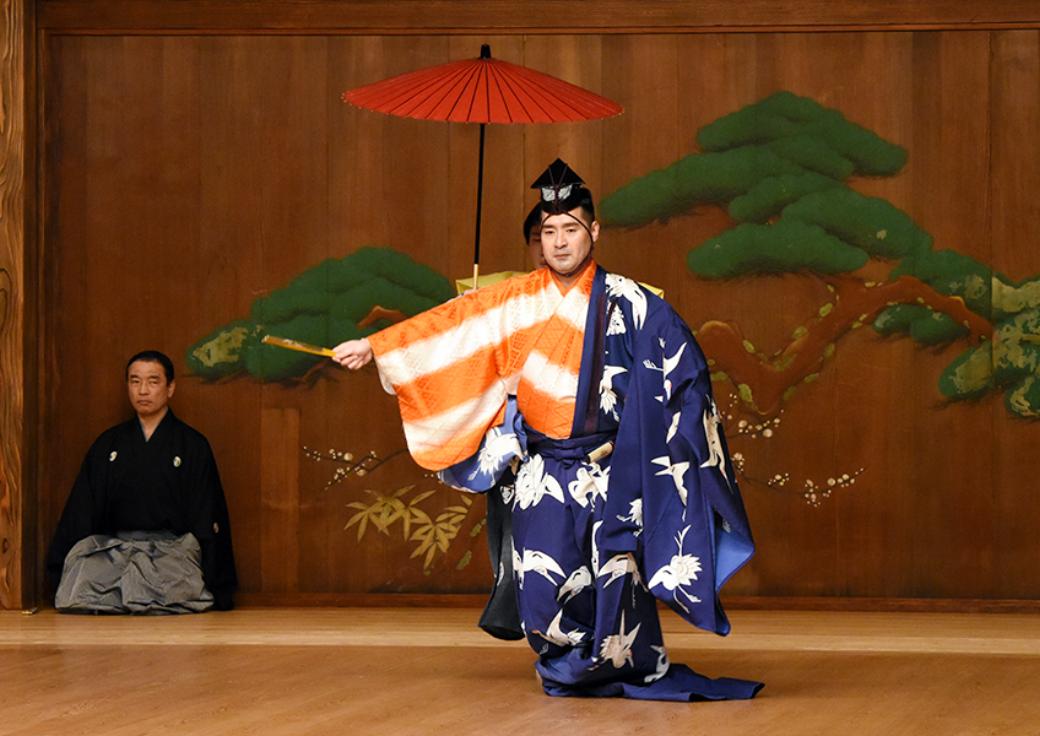
Kyogen: Suehirogari
Coming soon
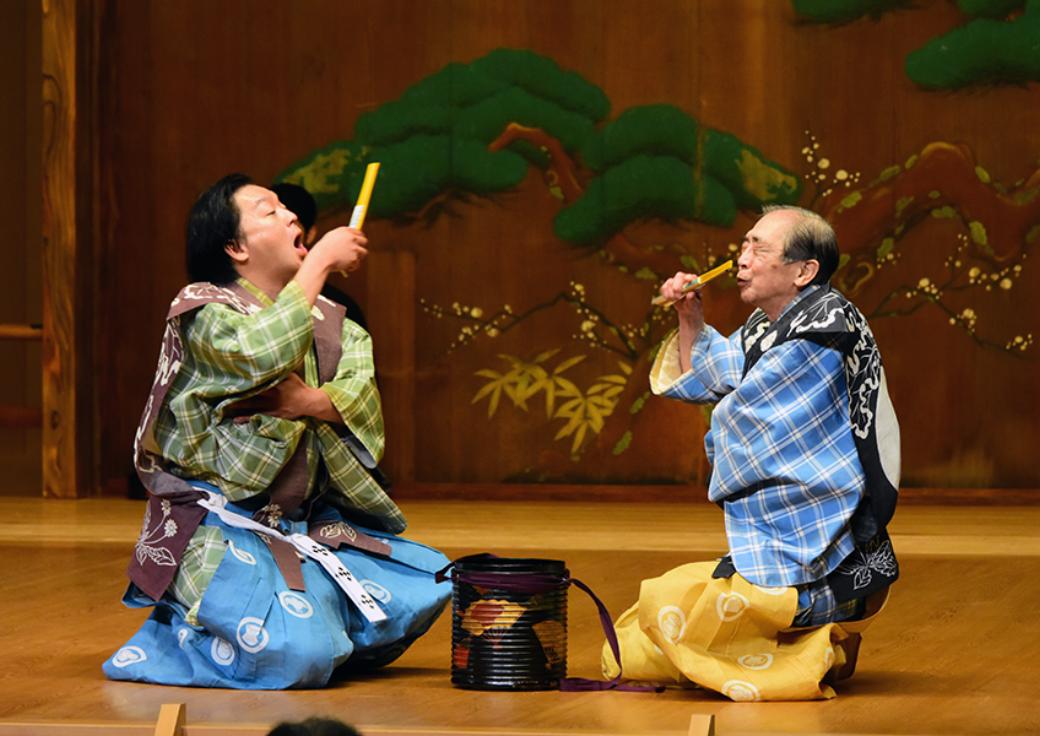
Kyogen: Busu
Coming soon
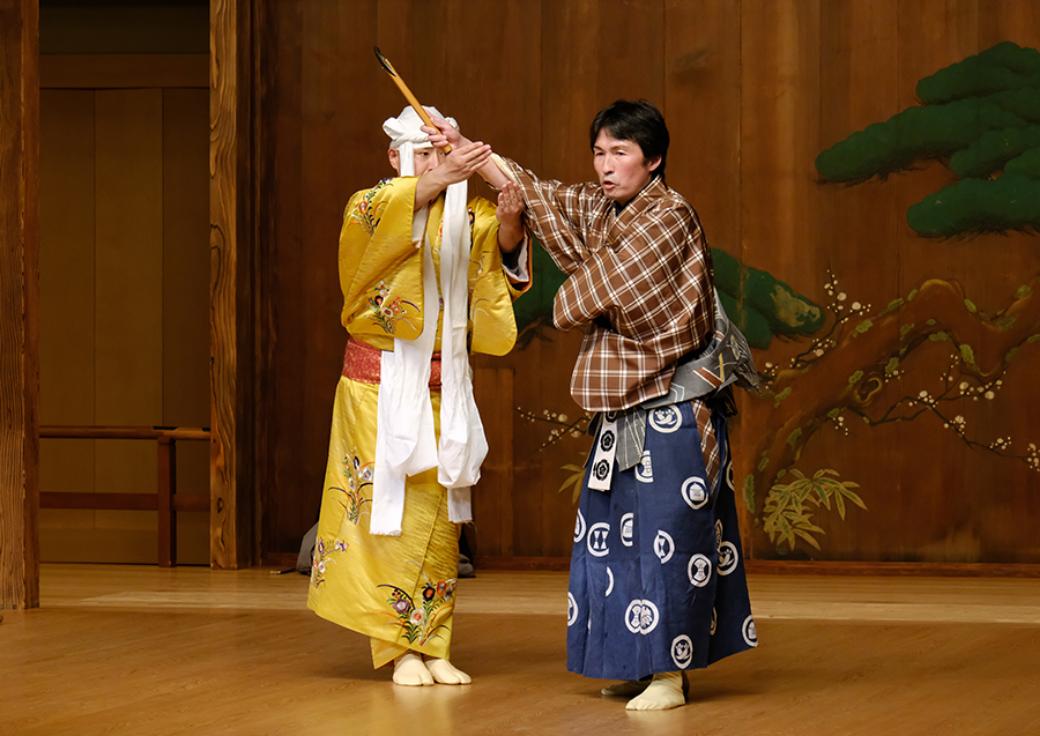
Kyogen: Kamabara
Coming soon
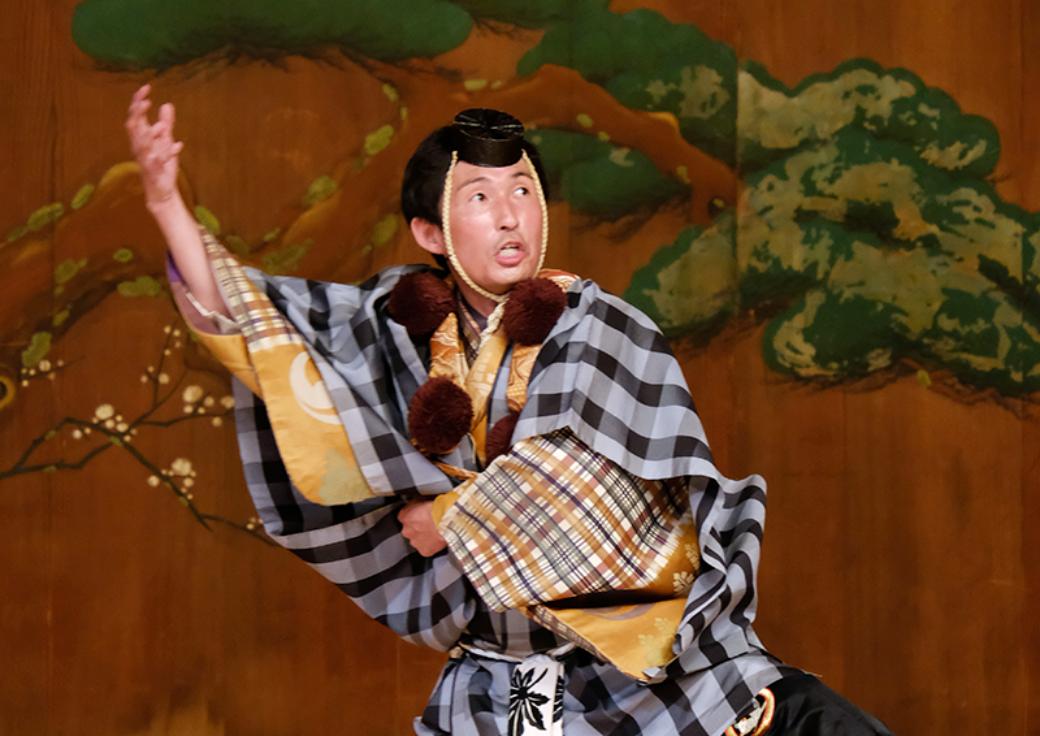
Kyogen: Kaki Yamabushi
After completing his training in the mountains, a yamabushi, or mountain ascetic, is on his way back to his hometown when he gets hungry. Seeing some delicious-looking persimmons, he climbs a tree and starts eating them from the ones he can get his hands on easily.
The owner of the persimmon tree comes to check the area and finds priest eating his precious persimmon without permission and calls out angrily. In a panic, the yamabushi hides behind a tree ……
This work amusingly depicts a mountain ascetic who cannot honestly apologize for eating persimmons without permission and tries to cover it up somehow by pretending to be a black kite.
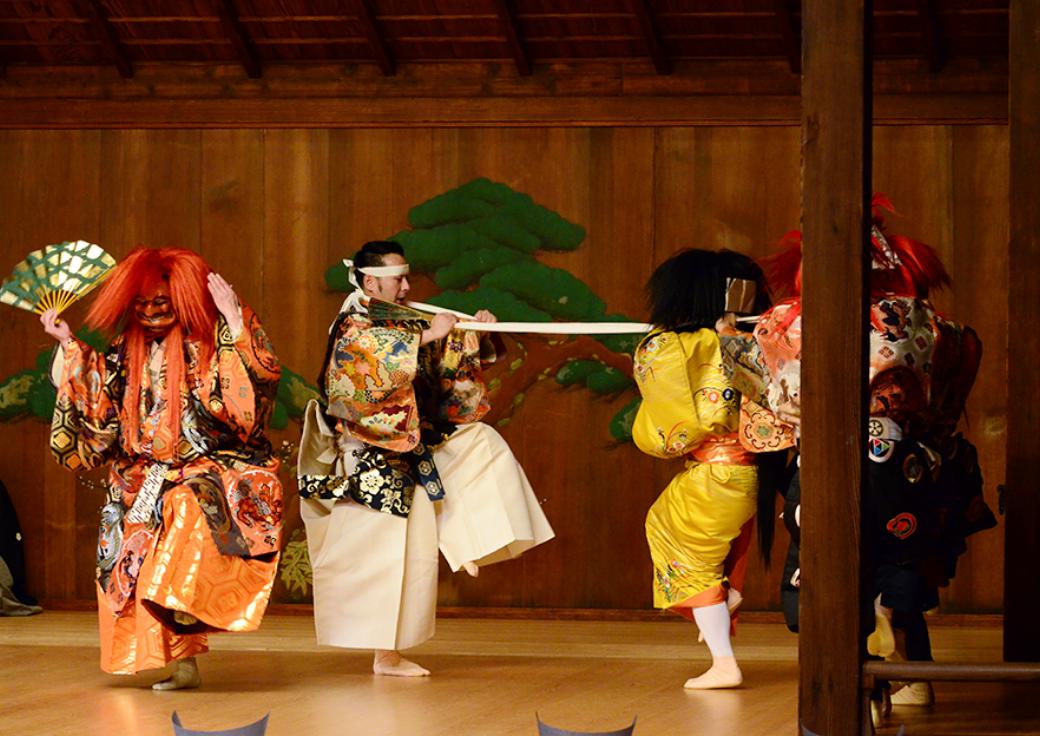
Kyogen: Kubihiki
Coming soon